Mic Check Poet Profile: Jules Stevenson and Steve Locke
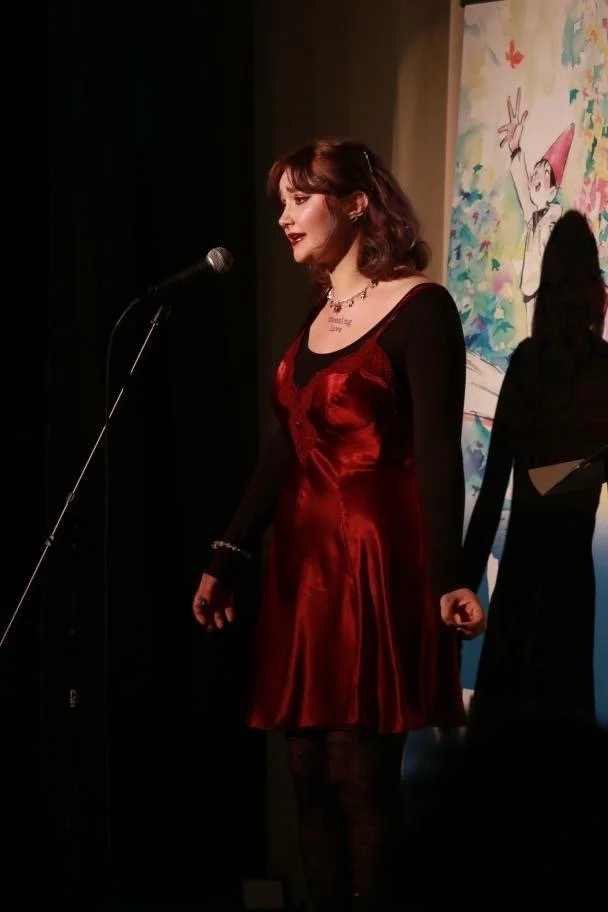
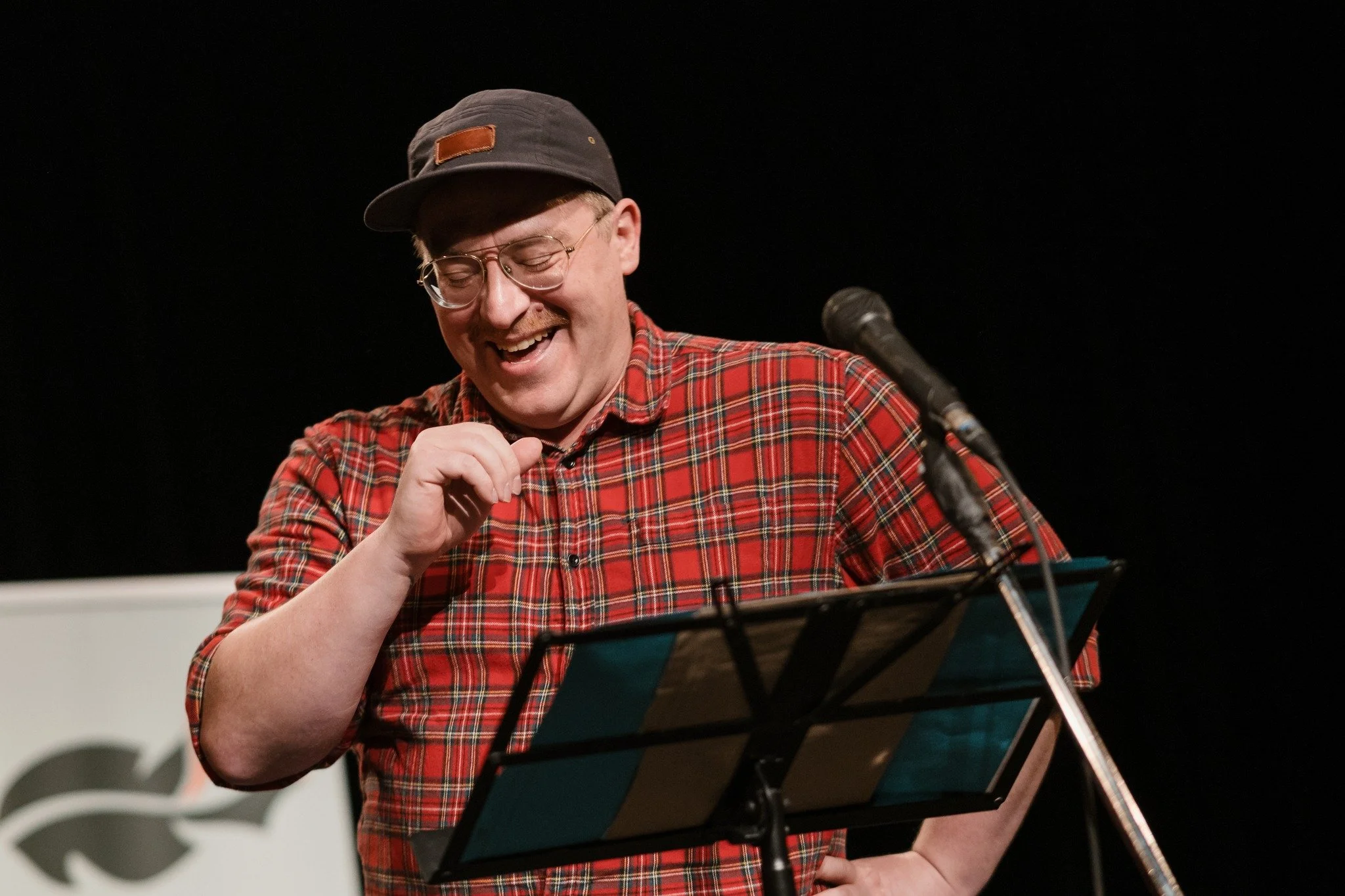
Holding the Mic, Holding the Room—Steve Locke and Jules Stevenson on Poetry, Care, and Community
By: Chey Wright | IDIC Verse
Winnipeg Poetry Slam has always been more than a stage. It is a room where voices are held, where silence can be shared, and where community is built one poem at a time. That intention still defines the room today, guided by artists who understand that poetry is as much about care as it is about craft. At the centre of that room—sometimes behind the mic and sometimes quietly making space—are Steve Locke and Jules Stevenson.
Both poets will be featured headliners in the upcoming open mic showcase alongside myself on February 11th. Still, this night is less about billing and more about presence. Steve and Jules represent two deeply connected threads of Winnipeg’s spoken word scene: care-driven leadership and emotionally honest artistry, woven together through years of mentorship, collaboration, and trust.
Before talking about lineups or logistics, we started with something lighter—what they’ve been reading lately. Steve has been pulling inspiration from many directions at once. He spoke about reading Niigaan Sinclair’s Wînipêk, alongside Cormac McCarthy’s Blood Meridian, a book he described as “intense and violent and dark,” yet reflective of modern systems of oppression. In poetry, Steve highlighted voices close to home, including Hannah Green’s Xanax Cowboy and the work of Murgatroyd Monahan. Of Monahan’s writing, he said her lines are “like arrows that just strike you… and you just sit there with the wounds for a bit,” opening space to understand pain and what it takes to heal.
Jules’ recent reading list leans unapologetically into dread. Over the past year, she has immersed herself in Crime and Punishment, 1984, and Frankenstein. “It just fills you with dread,” she laughed, “which is what I’ve been reading lately.” Poetically, Jules continues to return to Richard Siken—Crush and War of the Foxes—and has been revisiting Andrea Gibson after watching the documentary: Come See Me in the Good Light. “I bawled my eyes out,” she said.
Steve’s relationship with poetry slam began years ago in Vancouver while studying creative writing at The University of British Columbia. A first date at the Vancouver Poetry Slam became a turning point. “In that one night, I was like, I want to do that,” he recalled. “Whatever I was doing before was like nothing, and this was a whole sea change for me.” While the transition from page poetry to performance took time, it wasn’t until returning to Winnipeg that slam became central to his creative life—eventually leading him into organizing, mentorship, and community building.
Jules’ path into spoken word is deeply intertwined with Steve’s. Writing since childhood, she first encountered slam as a teenager in Selkirk when Steve was invited to speak at a community poetry workshop. “My mother was like, ‘You can’t leave this meeting until you get his email,’” Jules laughed. She was fourteen or fifteen at the time. Years later, mentorship, self-publishing, and persistence carried her forward—despite the frustration of being underage in a bar-based scene. Everything shifted after her poem Apology to My Cat went viral online. “That poem really kind of changed everything for me,” Jules said. “That’s one thing people know about me.”
The post-COVID reboot of Winnipeg Poetry Slam came from a shared sense of absence. Steve reconnected with longtime collaborator Kortnee Stevens, and together they began again with low-stakes open mics—often filling time themselves until someone found the courage to step up to the mic. Reflecting on Kortnee’s departure from organizing, Steve spoke with deep respect for her impact on the community. “We’ll all miss Kortnee at the shows,” he said. “She was definitely a crowd favourite host and a face for the community who embodied what we both worked really hard to represent, which was openness, accessibility, supporting health and wellness of all participants… and reminding everyone to take care of themselves and each other.”
Kortnee stepped back for personal and creative reasons, but Steve emphasized that her absence from organizing is also an investment in her art. “This time away from organizing is giving her the chance to work on her art,” he noted, adding that the reboot happened because “we missed being in that space too. As community members and as artists.”
That care-forward approach carries directly into this upcoming showcase. For Steve, the night functions as both artistic statement and offering. “This is a show that I’ve programmed as a way to lay down what my work over the past couple years,” he said. “It’s sort of like a manifesto.” His set blends older grounding pieces with newer, more complex work, confronting hidden darkness and drawing a clear line between what was and what comes next.
Jules’ set follows a similar arc. “My poetry is very personal. It’s often very dark,” she shared, “but themes of hope and love are starting to really come out.” Her performance traces where she started, where she is now, and how she found her way through. “Performing really gives me a chance to tell that story in a way that’s healthy for myself… and turns it into something positive.”
The February showcase on the 11th will begin with an open mic by design. Steve explained that he wants to “open up the stage to people who want to try it out too,” to share vulnerability and see what happens. Jules put it simply: “Any kind of poetry night I attend, I walk away changed… If you want to feel a bit changed, then you should come see it.”
This showcase is an invitation—to listen, to speak, and to sit in a room where stories are shared honestly.
Because poetry, at its best, does not just fill a room.
It holds it.
Read Steve and Jules’ bios here.